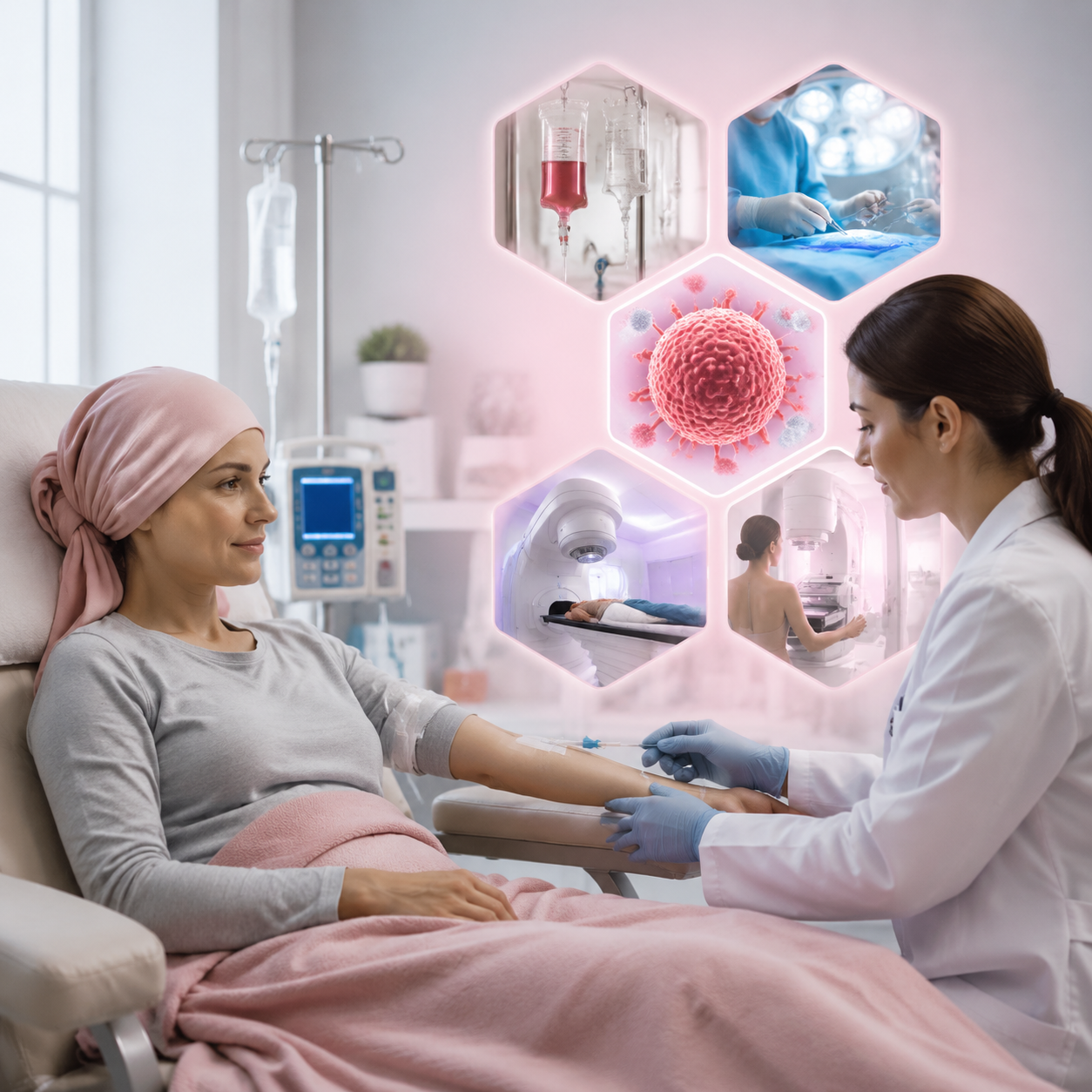
Advanced Diagnosis, Personalised Treatment, and Compassionate Breast Cancer Care at GEM Cancer Centre
A breast cancer diagnosis can feel overwhelming, but early detection and timely treatment significantly improve the chances of successful recovery. At GEM Cancer Centre, we provide comprehensive Breast Cancer Treatment in Coimbatore through advanced diagnostic technology, evidence-based treatment protocols, and a multidisciplinary team of experienced breast oncology specialists.
Our team includes medical oncologists, surgical oncologists, radiation oncologists, breast imaging specialists, pathologists, radiologists, oncology nurses, rehabilitation experts, and supportive care specialists, all working together to develop personalised treatment plans based on each patient's unique diagnosis and healthcare needs.
Whether you require breast-conserving surgery (lumpectomy), mastectomy, breast reconstruction, chemotherapy, targeted therapy, immunotherapy, hormone therapy, radiation therapy, or palliative care, every treatment plan is carefully tailored according to:
At GEM Cancer Centre, our focus extends beyond treating cancer. We are committed to preserving quality of life, supporting emotional well-being, and providing compassionate care throughout every stage of diagnosis, treatment, recovery, and long-term survivorship.
If you are searching for the best breast cancer treatment in Coimbatore, breast cancer specialists in Coimbatore, or an experienced breast cancer hospital in Coimbatore, GEM Cancer Centre offers advanced cancer care using the latest medical technology and internationally accepted treatment guidelines.
Seek medical evaluation without delay if you notice:
Early diagnosis saves lives. Prompt evaluation allows breast cancer to be detected at an earlier stage, when treatment is often more effective and less extensive.
Breast cancer is classified into different types based on where it begins and its biological characteristics. Identifying the type of breast cancer helps our specialists recommend the most effective treatment plan.
Ductal Carcinoma In Situ (DCIS) is a non-invasive breast cancer that remains confined to the milk ducts and has not spread into surrounding breast tissue. It is often detected through routine mammography and is highly treatable when diagnosed early.
Invasive Ductal Carcinoma (IDC) is the most common type of breast cancer. It begins in the milk ducts and invades nearby breast tissue. Without treatment, it may spread to the lymph nodes and other organs.
Invasive Lobular Carcinoma (ILC) starts in the milk-producing lobules before spreading into surrounding breast tissue. It can be more difficult to detect on physical examination because it often grows in a diffuse pattern.
HER2-positive breast cancer produces an excess amount of the HER2 protein, which can cause cancer cells to grow more rapidly. Targeted therapies have significantly improved outcomes for patients with this subtype.
Hormone receptor-positive breast cancers grow in response to the hormones oestrogen or progesterone. These cancers often respond well to hormone (endocrine) therapy.
Triple-negative breast cancer lacks oestrogen receptors (ER), progesterone receptors (PR), and HER2 expression. Although it tends to be more aggressive, advances in chemotherapy and immunotherapy have improved treatment options for selected patients.
Breast cancer is staged to determine how far the disease has progressed and to guide treatment planning.
Non-invasive cancer confined to the milk ducts (DCIS).
Small tumour limited to the breast with little or no lymph node involvement.
Larger tumour or limited spread to nearby lymph nodes.
Locally advanced cancer involving multiple lymph nodes or surrounding tissues.
Cancer that has spread to distant organs such as the bones, liver, lungs, or brain.
Our specialists use clinical examination, imaging studies, biopsy findings, and advanced diagnostic tests to accurately determine the stage of breast cancer before recommending treatment.
Early detection plays a crucial role in improving breast cancer outcomes. When breast cancer is diagnosed at an early stage, treatment is often less extensive and more effective, with better long-term survival rates.
Regular breast cancer screening, awareness of breast changes, and prompt evaluation of symptoms can help detect cancer before it spreads.
If you notice a breast lump, nipple discharge, changes in breast size or shape, skin dimpling, or persistent breast pain, consult a breast oncology specialist without delay.
At GEM Cancer Centre, we provide comprehensive Breast Cancer Treatment in Coimbatore through a multidisciplinary team of experienced breast oncology specialists, including medical oncologists, surgical oncologists, and radiation oncologists. Our team is supported by advanced diagnostic imaging facilities, modern treatment technologies, and personalised treatment planning to deliver compassionate and evidence-based cancer care.
Our approach includes:
Whether you are newly diagnosed with breast cancer or seeking a second opinion, our experienced oncology specialists provide personalised treatment plans based on cancer type, tumour stage, hormone receptor status, HER2 status, and individual healthcare needs.
Patients choose GEM Cancer Centre for:
At GEM Cancer Centre, we are committed to providing advanced Breast Cancer Treatment in Coimbatore with a focus on accurate diagnosis, personalised therapy, quality care, and continuous support throughout every stage of the cancer journey.
A breast cancer diagnosis can be overwhelming, but timely medical care from experienced specialists can make a significant difference in treatment outcomes and quality of life. Early detection, accurate diagnosis, and personalised treatment are essential steps towards better breast health.
At GEM Cancer Centre, our experienced breast oncology team provides complete cancer care—from advanced screening and diagnosis to personalised treatment, surgery, chemotherapy, radiation therapy, targeted therapy, immunotherapy, and long-term survivorship support.
Whether you need breast cancer screening, expert consultation, a second opinion, or advanced oncology care, our multidisciplinary team is committed to delivering compassionate, patient-centred treatment using the latest evidence-based approaches.
If you notice a breast lump, persistent breast pain, nipple discharge, changes in breast size or shape, or have a family history of breast or ovarian cancer, seek medical evaluation without delay. Early diagnosis offers the best opportunity for successful treatment.
Our breast oncology specialists are here to answer your questions, explain your treatment options, and guide you through every step of your care with confidence and compassion.
Watch our expert oncologists explain symptoms, screenings, and treatments to help you stay informed and prepared.

Mammogram & Ultrasound — Are They Enough for Breast Cancer Screening?

Breast Cancer Awareness Podcast | Dr. Madhu Sairam & Dr. Prema

Can Breast Cancer Affect Men? | Dr. Shiva Kumar Explains

Breast Cancer Expert Shorts

Breast Cancer Expert Shorts
Breast Cancer Expert Shorts

Breast Cancer Expert Shorts

Breast Cancer Expert Shorts

Breast Cancer Expert Shorts

Breast Cancer Expert Shorts

Early Detection Saves Lives

Breast Cancer Myths vs Facts

Self Breast Examination