Advanced Diagnosis, Personalised Treatment, and Comprehensive Bladder Cancer Care
A diagnosis of bladder cancer can be overwhelming, but early detection and timely treatment can significantly improve outcomes. At GEM Cancer Centre, we provide comprehensive Bladder Cancer Treatment in Coimbatore through advanced diagnostic technology, experienced oncology specialists, and personalised treatment plans designed according to each patient's condition.
Our multidisciplinary team includes medical oncologists, surgical oncologists, radiation oncologists, radiologists, pathologists, and supportive care specialists who work together to provide coordinated cancer care. Every treatment plan is developed after evaluating the cancer type, tumour stage, overall health, and individual treatment goals.
Whether you require minimally invasive procedures, bladder cancer surgery, chemotherapy, immunotherapy, radiation therapy, or long-term monitoring, our specialists provide evidence-based treatment focused on improving outcomes while preserving quality of life.
Patients searching for expert Bladder Cancer Treatment in Coimbatore can rely on GEM Cancer Centre for advanced diagnosis, personalised care, and continuous support throughout their cancer journey.
If you notice blood in urine or persistent urinary symptoms, consult our bladder cancer specialists for early evaluation.
Bladder cancer develops when abnormal cells in the urinary bladder grow uncontrollably and form a tumour. The bladder stores urine before it leaves the body, and most bladder cancers begin in the urothelial cells lining the inner surface.
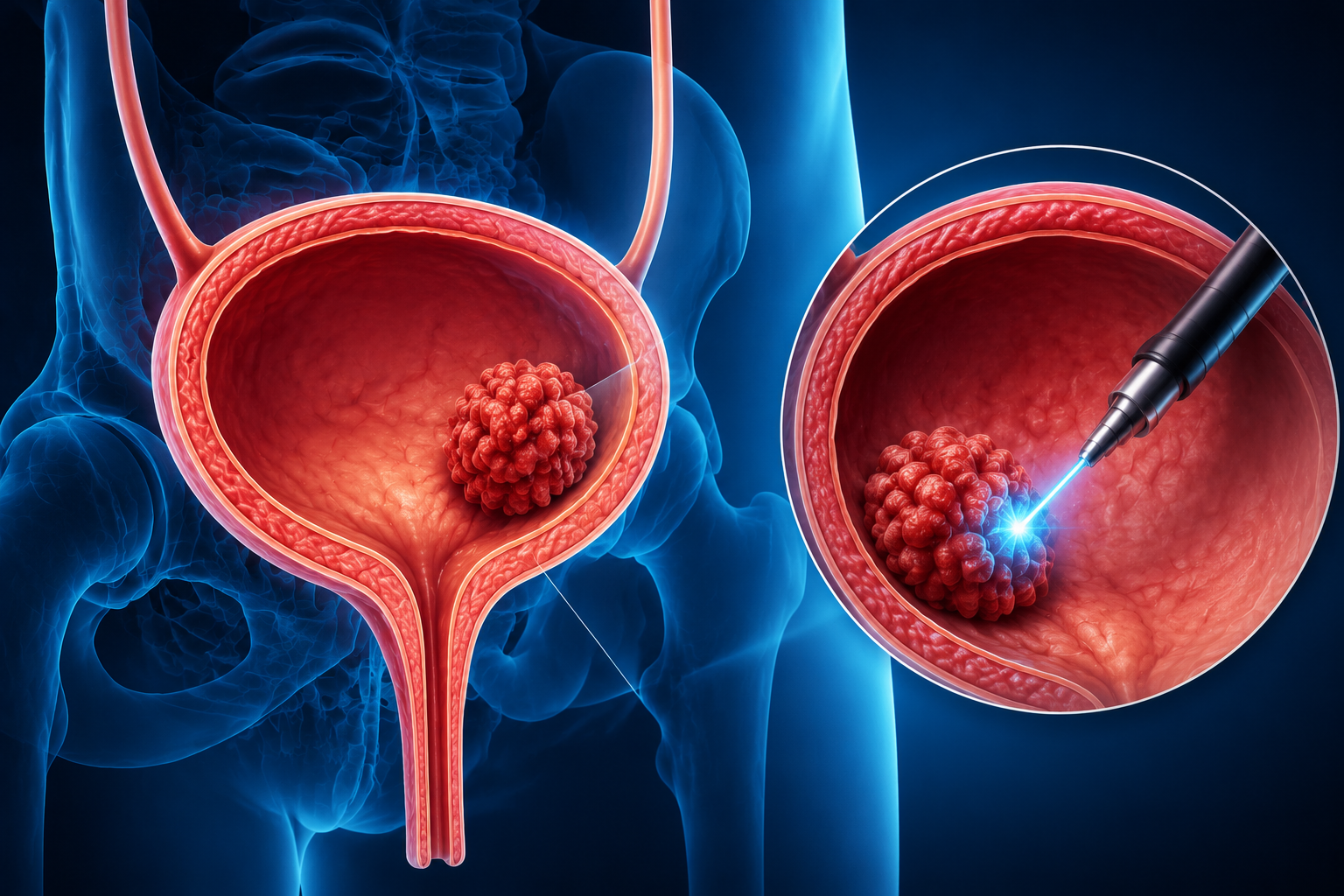
This type remains limited to the inner bladder lining. Early-stage bladder cancer is often treated with TURBT surgery followed by treatments such as BCG immunotherapy in selected patients to reduce recurrence risk.
When cancer spreads into the bladder muscle, more intensive treatment may be required. Depending on the stage, treatment options may include bladder cancer surgery, chemotherapy, immunotherapy, radiation therapy, or combined approaches.
Early diagnosis helps improve treatment options and may help preserve bladder function.
Recognising symptoms early can help diagnose bladder cancer at a treatable stage.
No. Blood in urine may occur due to infections, kidney stones, or other medical conditions. However, visible blood in urine should never be ignored. A consultation with a bladder cancer specialist in Coimbatore can help identify the cause and ensure timely treatment.
At GEM Cancer Centre, our experienced oncology team provides comprehensive bladder cancer care using advanced technology, personalised treatment planning, and multidisciplinary expertise.
Our goal is to provide effective cancer treatment while supporting patients throughout recovery.
Accurate diagnosis is essential for selecting the right treatment approach. GEM Cancer Centre uses advanced diagnostic methods to identify the type and stage of bladder cancer.
Cystoscopy is one of the primary tests for bladder cancer. A thin camera is inserted through the urinary passage to examine the bladder lining and identify abnormal growths.
Urine cytology examines urine samples for abnormal or cancerous cells and helps detect certain types of bladder cancer.
Transurethral Resection of Bladder Tumour (TURBT) is both a diagnostic and treatment procedure for early bladder cancer. It removes visible tumours without external incisions and provides tissue samples for laboratory analysis.
Depending on the condition, specialists may recommend: CT scan, MRI scan, PET-CT when required, and Ultrasound. These tests help assess tumour size, lymph node involvement, and cancer spread.
Laboratory examination of tumour tissue helps determine cancer type, grade, and stage, allowing specialists to develop a personalised treatment plan.
Treatment depends on the cancer stage, tumour characteristics, and overall health.
For non-muscle-invasive bladder cancer, TURBT is commonly used to remove tumours while preserving the bladder.
For advanced bladder cancer, surgical options may include:
Patients seeking bladder cancer surgery in Coimbatore receive comprehensive surgical planning and postoperative support at GEM Cancer Centre.
Bladder cancer treatment involves more than removing the tumour. GEM Cancer Centre provides complete cancer care from diagnosis to long-term follow-up.
Chemotherapy uses anti-cancer medicines to destroy cancer cells. It may be given before surgery, after surgery, or for advanced disease.
Immunotherapy helps the immune system recognise and attack cancer cells. It may be recommended for selected patients with advanced or recurrent bladder cancer.
Radiation therapy uses targeted radiation beams to destroy cancer cells while protecting surrounding tissues. It may be used: Along with chemotherapy, After surgery in selected cases, When surgery is not suitable, or For symptom control in advanced cancer.
The cost of Bladder Cancer Treatment in Coimbatore depends on multiple factors, including: Cancer stage, Diagnostic tests, Type of surgery, Chemotherapy or immunotherapy requirements, Radiation therapy sessions, Hospital stay, and Follow-up care.
During consultation, our specialists explain the recommended treatment plan and provide cost guidance based on individual healthcare needs.
Specialists review symptoms, medical history, and previous reports.
Tests such as cystoscopy, biopsy, urine cytology, CT scan, MRI, and PET-CT help determine disease extent.
A multidisciplinary team develops a treatment strategy based on diagnosis and patient needs.
Treatment may include TURBT, surgery, chemotherapy, immunotherapy, radiation therapy, or combined approaches.
Regular monitoring helps detect recurrence early and supports long-term health.