Advanced Diagnosis and Personalised Skin Cancer Care
Skin cancer is one of the most common cancers worldwide, but early detection and timely treatment can significantly improve outcomes. Changes in a mole, a non-healing sore, unusual skin growth, or persistent skin irritation should not be ignored, as they may indicate skin cancer. At GEM Cancer Centre, we provide advanced Skin Cancer Treatment in Coimbatore with modern diagnostic facilities, personalised treatment plans, and evidence-based therapies delivered by experienced oncology specialists.
Our multidisciplinary team includes surgical oncologists, medical oncologists, radiation oncologists, dermatopathologists, reconstructive surgeons, radiologists, and oncology nurses who work together to provide comprehensive cancer care. Every treatment plan is personalised based on the type of skin cancer, tumour size, location, stage, overall health, and individual treatment goals.
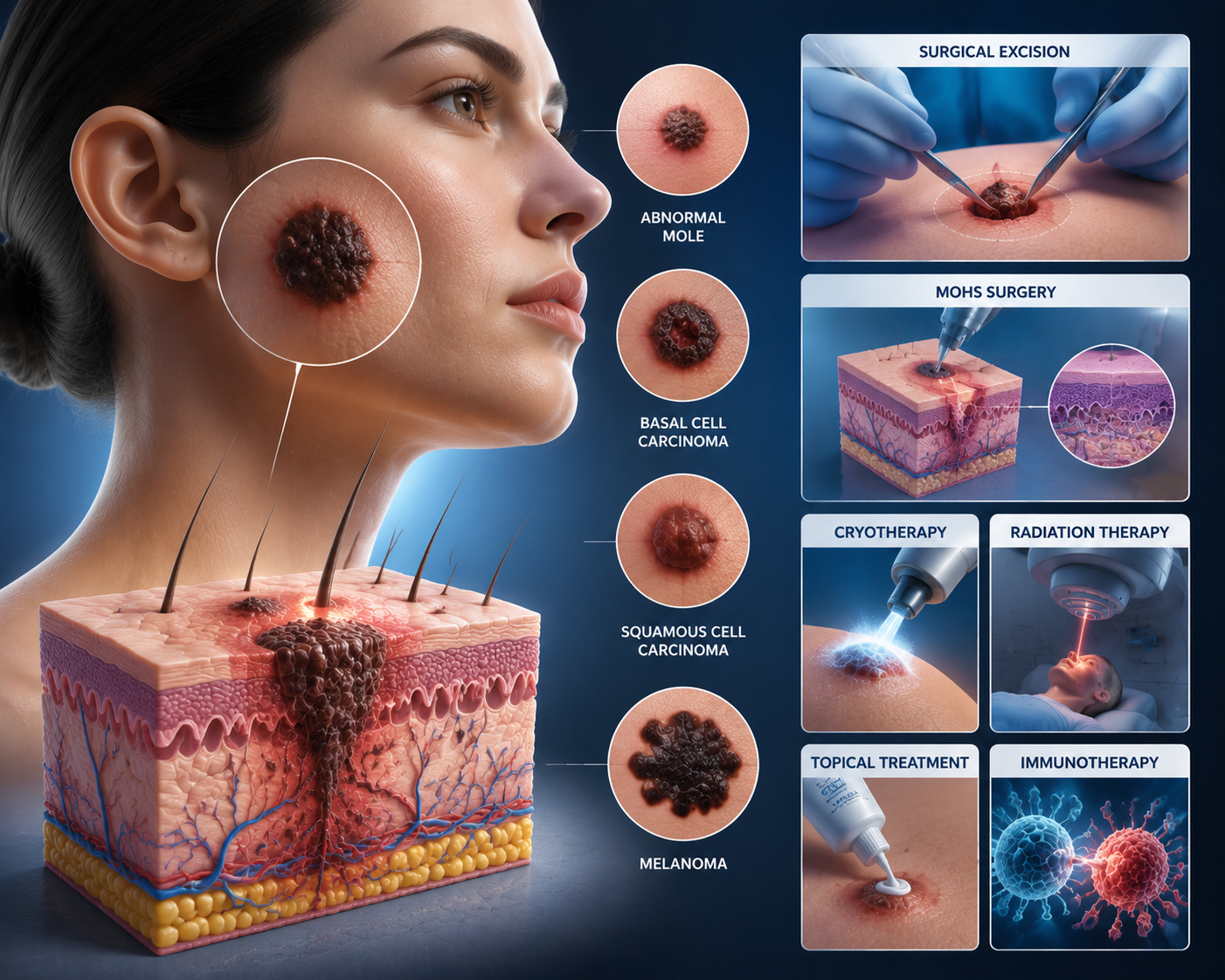
There are three main types of skin cancer:
Basal cell carcinoma is the most common type of skin cancer. It usually grows slowly and rarely spreads to distant organs. However, untreated lesions can damage nearby tissues and require more complex treatment. Early diagnosis and removal often provide excellent outcomes.
Squamous cell carcinoma develops in the outer layers of the skin and may grow faster than basal cell carcinoma. If untreated, it can spread to nearby tissues or lymph nodes. Prompt medical evaluation and treatment can improve recovery chances.
Melanoma is a more aggressive form of skin cancer because it has a higher risk of spreading. Advances in surgery, immunotherapy, and targeted therapy have improved outcomes for many patients with melanoma.
Patients searching for expert skin cancer care can rely on GEM Cancer Centre for accurate diagnosis, advanced treatment options, and continuous support throughout their cancer journey. Early evaluation allows doctors to identify the disease at an earlier stage when treatment options are more effective.
Several factors may increase the risk of developing skin cancer, including:
Having risk factors does not always mean a person will develop skin cancer. However, regular skin checks, sun protection, and early medical evaluation of suspicious changes can help detect the disease at an early stage.
Recognising warning signs early is important for successful treatment. Common symptoms include:
Any unusual or persistent skin change should be evaluated by an experienced specialist.
Accurate diagnosis is the foundation of successful treatment. At GEM Cancer Centre, specialists use advanced diagnostic methods to identify the type and extent of skin cancer.
A detailed skin examination helps evaluate suspicious moles, lesions, ulcers, and growths. Doctors also review medical history, family history, and risk factors.
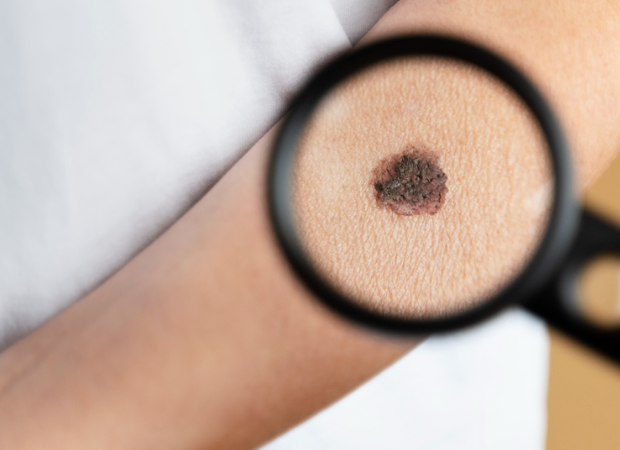
Dermatoscopy uses specialised magnification technology to examine skin lesions in greater detail. It helps improve diagnostic accuracy and identify suspicious changes that may require further evaluation.
A biopsy is the most reliable method to confirm skin cancer. A small tissue sample is examined under a microscope to determine the cancer type, grade, and other important characteristics.
Depending on the diagnosis, additional tests may include: CT scan, MRI, PET-CT scan, Sentinel lymph node biopsy, and Molecular testing for melanoma. These investigations help determine whether cancer has spread and guide personalised treatment decisions.
Treatment depends on the type, stage, size, and location of the tumour. At GEM Cancer Centre, specialists develop personalised Skin Cancer Treatment in Coimbatore plans using advanced and evidence-based approaches.
Surgery is the primary treatment option for many skin cancers. Surgical oncologists remove the tumour along with an appropriate margin of healthy tissue to reduce the risk of recurrence. For cancers located in sensitive areas such as the face, nose, ears, or scalp, reconstructive procedures may be performed to restore appearance and function. The surgical approach is selected based on tumour characteristics and the patient’s individual requirements.
Radiation therapy uses high-energy radiation beams to destroy cancer cells while protecting surrounding healthy tissues. It may be recommended when surgery is not suitable, when tumours are located in difficult areas, or after surgery to reduce recurrence risk. Advanced radiation techniques allow specialists to deliver accurate treatment with improved safety and minimal impact on nearby tissues.
Immunotherapy helps the body’s immune system recognise and attack cancer cells. It is commonly considered for selected patients with advanced melanoma and certain high-risk skin cancers. Before recommending immunotherapy, specialists evaluate tumour characteristics, previous treatments, overall health, and expected benefits to determine whether it is the right option.
Targeted therapy focuses on specific genetic changes that help cancer cells grow and spread. Molecular testing can identify patients who may benefit from these treatments. This personalised approach allows doctors to select therapies based on the biology of the tumour rather than using the same treatment strategy for every patient.
At GEM Cancer Centre, every patient receives personalised care from diagnosis through recovery.
The journey begins with a detailed evaluation of symptoms, skin changes, medical history, family history, and risk factors. Specialists recommend suitable investigations based on the findings.
Advanced tests such as dermatoscopy, biopsy, CT scans, MRI, PET-CT, and molecular testing help confirm the diagnosis and determine the stage of cancer. Accurate staging allows doctors to understand the extent of disease and select the most appropriate treatment approach.
A multidisciplinary tumour board reviews the patient’s reports and develops a customised treatment strategy. The plan considers: Cancer type, Tumour location, Disease stage, Overall health, and Personal treatment goals. This collaborative approach ensures patients receive comprehensive and effective care.
Depending on the diagnosis, treatment may include surgery, radiation therapy, immunotherapy, targeted therapy, reconstructive procedures, or a combination of treatments. At GEM Cancer Centre, specialists focus on controlling cancer while helping patients maintain confidence, comfort, and quality of life.
After completing treatment, regular follow-up appointments help monitor recovery, detect new skin changes, and reduce the risk of recurrence.
Our dedicated reconstructive surgeons collaborate with surgical oncologists during complex excisions. We utilize advanced tissue transfer, flap, and grafting techniques to restore your natural appearance and ensure optimal anatomical function.
Choosing the right cancer centre is important for receiving effective and personalised treatment. At GEM Cancer Centre, our oncology team combines advanced technology, clinical expertise, and compassionate care to provide comprehensive Skin Cancer Treatment in Coimbatore.
Each patient undergoes detailed evaluation before treatment planning. Our specialists consider cancer type, stage, tumour location, overall health, and personal preferences to create an individualised treatment approach.
Our tumour board approach ensures that every treatment decision is based on scientific evidence and the latest oncology guidelines.
Patients benefit from:
Recovery is an important part of successful skin cancer management. At GEM Cancer Centre, patients receive continuous support after treatment to monitor healing, manage side effects, and maintain long-term skin health.
Follow-up care may include:
Regular monitoring helps identify recurrence early and allows timely medical intervention. Patients receiving Skin Cancer Treatment in Coimbatore at GEM Cancer Centre benefit from coordinated follow-up care designed to support long-term wellness.
The cost of treatment varies depending on several factors, including the type of skin cancer, stage of disease, diagnostic requirements, treatment approach, and individual healthcare needs.
Treatment expenses may include:
During consultation, specialists explain the recommended treatment plan and provide guidance regarding expected costs based on the patient’s condition.
If you notice a changing mole, non-healing sore, persistent skin lesion, or any unusual skin changes, seek expert medical advice without delay.
At GEM Cancer Centre, our experienced oncology specialists provide advanced diagnosis, personalised treatment plans, and comprehensive Skin Cancer Treatment in Coimbatore using modern evidence-based therapies.
Book your consultation today and take the first step towards expert skin cancer care with advanced technology, compassionate support, and personalised treatment at GEM Cancer Centre.