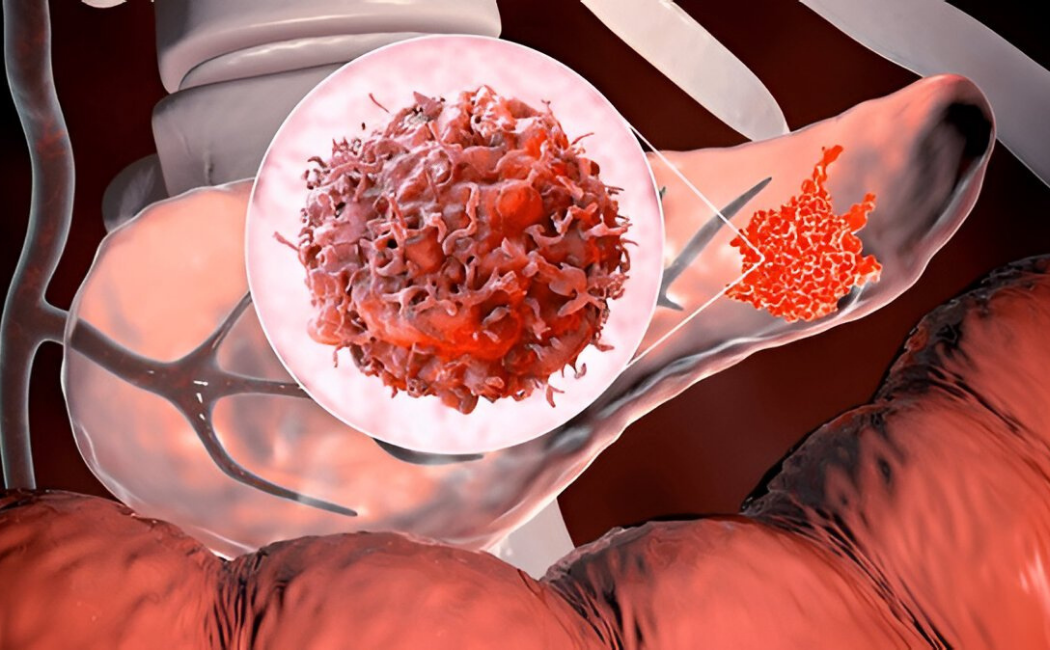
Stomach cancer, also called gastric cancer, is not a single disease. Different types of cancer can develop from different cells and tissues within the stomach and identifying the exact type is an important part of diagnosis and treatment planning.
For someone searching for Stomach Cancer in Coimbatore, understanding the different types can make medical reports easier to understand and help explain why doctors may recommend different tests after an abnormal endoscopy or biopsy.
The most common type is gastric adenocarcinoma, which develops from gland-forming cells in the stomach lining. Other, less common tumours include gastrointestinal stromal tumours (GISTs), neuroendocrine tumours and lymphomas. Rare cancers such as squamous cell carcinoma and leiomyosarcoma can also occur in the stomach.
The important point is that symptoms and scans alone usually cannot determine the exact type of stomach cancer.
A tissue sample examined by a pathologist is generally essential for confirming the diagnosis and identifying the tumour type.
What Is Stomach Cancer?
Stomach cancer is an abnormal growth of cells that begins in the tissues of the stomach.
The stomach contains several different types of cells and layers, which means different tumours can develop within it.
The stomach wall includes:
- Mucosa
- Submucosa
- Muscular layer
- Subserosa
- Serosa
The type of tumour, the layer involved and the location of the cancer can all influence how doctors diagnose and treat the disease.
Stomach cancers can also differ in their biological characteristics.
This is why doctors do not rely only on the appearance of a tumour during an endoscopy.
A biopsy and detailed pathological assessment help establish what the tumour actually is.
What Are the Main Types of Stomach Cancer?
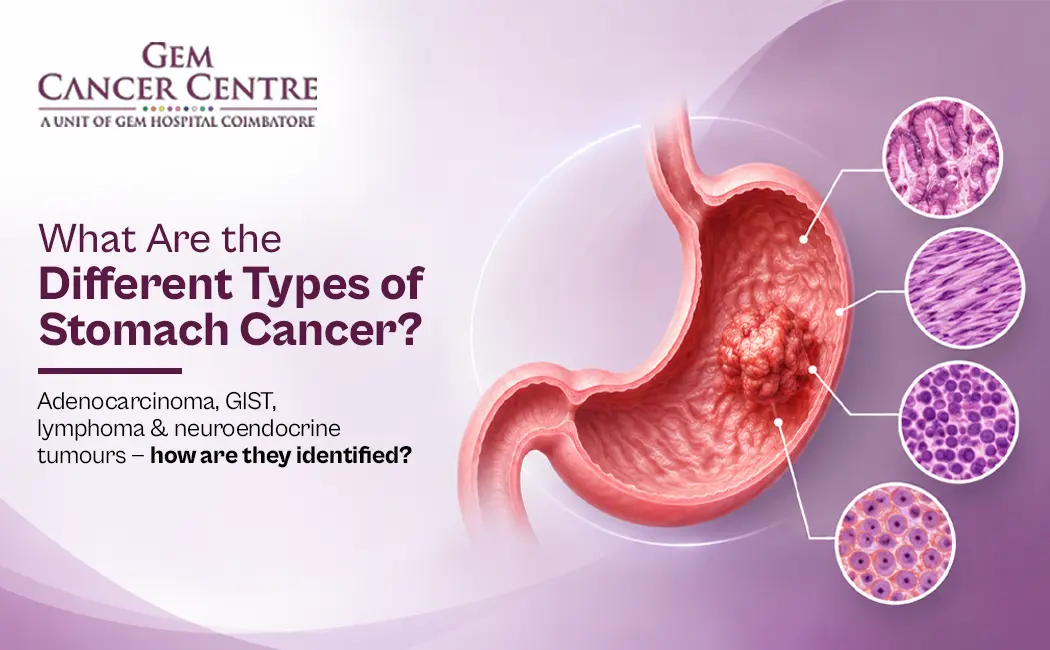
The major types of stomach cancer include adenocarcinoma, gastrointestinal stromal tumours, neuroendocrine tumours and gastric lymphoma.
Some rare cancers can also develop in the stomach.
The main categories include:
- Gastric adenocarcinoma
- Gastrointestinal stromal tumour (GIST)
- Gastric neuroendocrine tumour
- Primary gastric lymphoma
- Rare stomach cancers
Each develops from different types of cells and may require a different diagnostic and treatment approach.
What Is Gastric Adenocarcinoma?
Gastric adenocarcinoma is the most common type of stomach cancer and develops from gland-forming cells in the stomach lining.
Most stomach cancers fall into this category.
Adenocarcinoma can be further described according to its microscopic appearance and location.
Two commonly discussed patterns are:
Intestinal-Type Adenocarcinoma
Intestinal-type adenocarcinoma tends to form gland-like or tubular structures.
The cells can resemble certain normal intestinal or glandular cells when examined under a microscope.
Diffuse-Type Adenocarcinoma
Diffuse-type adenocarcinoma has a different microscopic pattern.
The tumour cells may be poorly cohesive and can spread more diffusely through the stomach wall.
In some patients, diffuse growth can lead to extensive thickening of the stomach wall.
These differences are identified through pathological examination rather than symptoms alone.
Does the Location of Adenocarcinoma Matter?
Yes. The location of a stomach tumour can affect diagnosis, staging and treatment planning.
Adenocarcinoma may develop in different regions, including:
- Cardia or upper stomach
- Body of the stomach
- Antrum
- Pyloric region
Tumours near the junction between the stomach and oesophagus may require particularly careful assessment because their classification and treatment can differ depending on their exact location.
This is one reason an endoscopy report usually records the precise site of a suspicious lesion.
What Is a Gastrointestinal Stromal Tumour?
A gastrointestinal stromal tumour, or GIST, is a type of tumour that develops from specialised cells in the wall of the gastrointestinal tract and commonly occurs in the stomach.
GISTs are different from gastric adenocarcinomas.
They arise from a different type of tissue and may behave differently.
Some GISTs are small and slow-growing, while others have a greater potential to grow or spread.
Doctors assess factors such as:
- Tumour size
- Location
- Mitotic activity
- Cellular characteristics
- Presence of spread
Specialised pathology and, in appropriate cases, molecular testing help establish whether a tumour is a GIST.
This distinction is important because the treatment approach for GIST can differ significantly from the treatment used for gastric adenocarcinoma.
What Are Gastric Neuroendocrine Tumours?
Gastric neuroendocrine tumours develop from neuroendocrine cells and form another less common group of stomach tumours.
Neuroendocrine cells have characteristics associated with both nerve-like and hormone-producing cells.
Gastric neuroendocrine tumours can behave differently depending on their type, size, grade and other clinical features.
Doctors may evaluate:
- Tumour size
- Number of lesions
- Grade
- Depth of invasion
- Ki-67 or proliferation activity where appropriate
- Hormonal or gastric conditions
- Evidence of spread
Because these tumours have different biological characteristics from adenocarcinoma, accurate pathological classification is important.
What Is Gastric Lymphoma?
Gastric lymphoma is a type of lymphoma that develops in the stomach rather than a typical stomach carcinoma.
Lymphomas arise from cells of the immune system.
Two important forms of primary gastric lymphoma include:
MALT Lymphoma
MALT stands for mucosa-associated lymphoid tissue.
Some gastric MALT lymphomas are associated with Helicobacter pylori infection and treatment can therefore differ significantly from the treatment of gastric adenocarcinoma.
Diffuse Large B-Cell Lymphoma
Diffuse large B-cell lymphoma is another type of lymphoma that can involve the stomach.
Its treatment is generally based on lymphoma-specific principles rather than the surgical approach commonly used for gastric adenocarcinoma.
This demonstrates why identifying the exact tumour type is so important.
A lesion that looks like stomach cancer on an endoscopy cannot necessarily be treated as adenocarcinoma until the pathology is established.
What Other Types of Stomach Cancer Can Occur?
Several rare cancers can originate in the stomach, although they account for a much smaller proportion of gastric malignancies.
These may include:
- Squamous cell carcinoma
- Adenosquamous carcinoma
- Small-cell carcinoma
- Leiomyosarcoma
- Other rare malignant tumours
These cancers can have different biological behaviour and treatment requirements.
Because they are uncommon, specialist pathology review can be particularly important when the biopsy shows an unusual tumour pattern.
How Are Different Types of Stomach Cancer Identified?
The exact type of stomach cancer is usually identified through endoscopy, biopsy and pathological examination.
The diagnostic pathway may include several stages.
Medical Evaluation
The doctor first considers symptoms, medical history, family history and risk factors.
Upper GI Endoscopy
An endoscope allows the specialist to examine the stomach lining directly.
The doctor may identify:
- Ulcers
- Abnormal growths
- Irregular areas
- Thickened mucosa
- Bleeding areas
- Suspicious lesions
Biopsy
If an abnormal area is identified, tissue samples can be taken during the endoscopy.
Pathology
A pathologist examines the tissue under a microscope and determines whether cancer is present and what type it may be.
For patients wanting to understand this process in greater detail, GEM Cancer Centre's existing article on how stomach cancer is diagnosed in Coimbatore explains the role of endoscopy, biopsy and imaging.
Why Is a Biopsy Important for Stomach Cancer?
A biopsy provides tissue that can be examined directly and is essential for distinguishing different types of stomach tumours.
An endoscopy can show what a lesion looks like.
A CT scan can show its size and location.
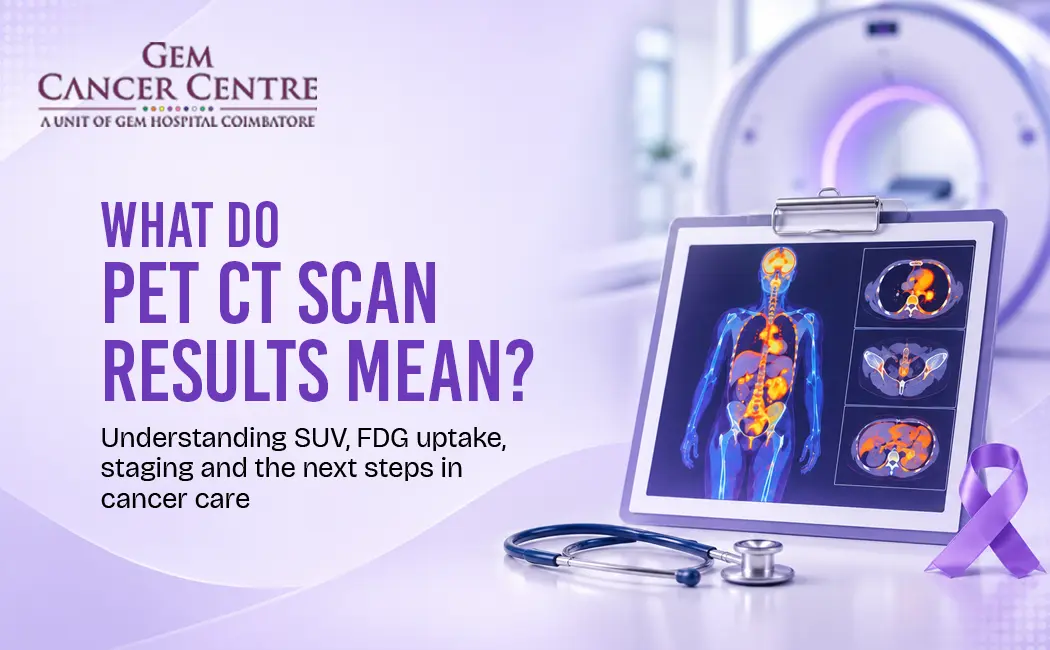
A PET-CT can provide additional information about metabolic activity in selected situations.
But these tests generally cannot replace tissue diagnosis when a definitive tumour classification is required.
The biopsy allows the pathologist to assess:
- Cell type
- Tumour architecture
- Differentiation
- Grade
- Other microscopic features
Additional testing may then be performed when required.
What Is Immunohistochemistry in Stomach Cancer Diagnosis?
Immunohistochemistry, or IHC, uses specific laboratory markers to help identify the type and characteristics of tumour cells.
When the microscopic appearance alone is not enough to classify a tumour, pathologists may use special stains and immunohistochemical markers.
For example, IHC can help distinguish:
- Adenocarcinoma
- Neuroendocrine tumour
- Lymphoma
- GIST
- Other unusual tumours
Different tumours express different proteins.
By identifying these patterns, the pathology team can provide a more precise diagnosis.
This is particularly important when the tumour is unusual or when the treatment would be substantially different depending on its classification.
What Is Biomarker Testing in Stomach Cancer?
Biomarker testing examines specific characteristics of cancer cells that may influence treatment options.
For gastric adenocarcinoma, doctors may consider biomarkers such as:
- HER2
- PD-L1
- Microsatellite instability
- Mismatch repair status
- Other molecular alterations when clinically relevant
These tests do not simply tell doctors what type of cancer is present.
They can also provide information that may help determine whether certain targeted or immune-based treatments could be considered.
Therefore, modern stomach cancer diagnosis can involve both histological classification and molecular characterisation.
Can Imaging Tell Which Type of Stomach Cancer It Is?
Imaging can provide important information about a stomach tumour, but it usually cannot establish its exact histological type by itself.
CT, PET-CT, MRI and other imaging methods can help doctors evaluate:
- Tumour size
- Location
- Nearby lymph nodes
- Involvement of surrounding structures
- Possible distant spread
These findings are important for staging.
However, different tumour types can sometimes appear similar on imaging.
That is why imaging and pathology work together.
Patients can also read GEM Cancer Centre's stomach cancer treatment guide to understand how diagnosis, staging and treatment planning connect.
Why Does Identifying the Type of Stomach Cancer Matter?
Different stomach cancers can require different treatment strategies, making accurate classification essential.
For example:
- Adenocarcinoma may be treated using a combination of surgery, chemotherapy, radiation or systemic therapies depending on stage and tumour characteristics.
- GIST may require a different surgical and medical approach.
- Lymphoma may require lymphoma-specific systemic treatment.
- Neuroendocrine tumours may require treatment based on their grade, size and biological behaviour.
Therefore, the question is not simply:
“Is this stomach cancer?”
Doctors also need to know:
“What type of stomach tumour is this?”
That distinction can influence the next diagnostic and treatment steps.
How Does Staging Differ From Cancer Typing?
Cancer type and cancer stage are two different pieces of information.
Cancer Type
Type describes what kind of tumour it is.
For example:
- Adenocarcinoma
- GIST
- Lymphoma
- Neuroendocrine tumour
Cancer Stage
Stage describes how far the cancer has progressed or spread.
Staging may consider:
- Depth of tumour invasion
- Lymph-node involvement
- Distant metastasis
A patient therefore needs both accurate tumour classification and appropriate staging.
One does not replace the other.
Can the Same Type of Stomach Cancer Behave Differently?
Yes. Two patients with the same broad type of stomach cancer can have different tumour characteristics and disease stages.
For example, two people may both have gastric adenocarcinoma, but one may have an early superficial tumour while another has disease involving lymph nodes or distant organs.
Their treatment plans may therefore be very different.
Other factors can also influence treatment, including:
- Tumour location
- Histological characteristics
- Biomarker results
- Overall health
- Nutritional status
- Previous treatment
- Patient preferences
This is why cancer treatment needs to be individualised.
What Happens After the Type of Stomach Cancer Is Confirmed?
Once the tumour type has been established, doctors usually move on to staging and treatment planning.
The next steps may include:
- Reviewing the pathology report
- Performing additional biomarker testing where appropriate
- Completing staging investigations
- Assessing the patient's overall health
- Reviewing the case with relevant specialists
- Discussing treatment options
- Developing an individual treatment plan
GEM Cancer Centre's existing article on what determines stomach cancer treatment in Coimbatore explains how stage, tumour location, pathology, molecular findings and overall health can influence treatment decisions.
Can Endoscopy Detect Early Stomach Cancer?
Yes. Upper GI endoscopy can identify suspicious abnormalities in the stomach lining and allow tissue samples to be collected.
Early lesions may appear as subtle changes in the stomach lining rather than large masses.
A specialist may assess:
- Surface irregularity
- Colour changes
- Depressed or raised areas
- Ulceration
- Abnormal blood vessels
- Lesion margins
If a superficial lesion is confirmed as an appropriate early gastric cancer, selected patients may be considered for advanced endoscopic treatment.
GEM Cancer Centre's article on endoscopic submucosal dissection for early stomach cancer explains how ESD may be used for carefully selected superficial lesions.
Does Every Stomach Cancer Need the Same Treatment?
No. Treatment depends on the tumour type, stage, biological characteristics and the patient's overall health.
For gastric adenocarcinoma, treatment may involve:
- Surgery
- Chemotherapy
- Radiation therapy
- Targeted therapy
- Immunotherapy
- Combination treatment
Other stomach tumours may require completely different approaches.
For example, a GIST may be managed differently from adenocarcinoma, while gastric lymphoma follows lymphoma-specific treatment principles.
This is why patients should avoid comparing their treatment plan directly with another person's treatment.
Why Is a Multidisciplinary Team Important?
A multidisciplinary cancer team can bring together specialists who contribute different areas of expertise to diagnosis and treatment planning.
Depending on the case, the team may include:
- Gastrointestinal surgical oncologists
- Medical oncologists
- Radiation oncologists
- Gastroenterologists
- Pathologists
- Radiologists
- Nuclear medicine specialists
- Nutrition specialists
- Oncology nurses
- Supportive-care professionals
The pathology result establishes the tumour type, while imaging helps assess its extent.
The oncology team then combines this information to develop a treatment plan.
For patients searching for Stomach Cancer in Coimbatore, this coordinated approach can be particularly important when the diagnosis is unusual or requires multiple treatment modalities.
What Should Patients Ask After a Stomach Cancer Diagnosis?
Patients should ask their specialist to explain both the cancer type and the cancer stage before discussing treatment options.
Useful questions include:
About the Diagnosis
- What type of stomach cancer do I have?
- Is it adenocarcinoma or another tumour type?
- What did the biopsy show?
- Do I need additional pathology testing?
About Biomarkers
- Do I need HER2 testing?
- Has PD-L1 been evaluated?
- Should MSI or mismatch-repair testing be performed?
- Are other molecular tests relevant to my case?
About Staging
- What stage is the cancer?
- Has it spread to lymph nodes?
- Is there evidence of distant spread?
- Do I need additional imaging?
About Treatment
- Is surgery required?
- Will chemotherapy be needed?
- Is radiation appropriate?
- Could targeted therapy or immunotherapy be considered?
- Should my case be reviewed by a multidisciplinary team?
Understanding the answers can make the treatment plan much easier to follow.
Where Can Patients Seek Evaluation for Stomach Cancer in Coimbatore?
Patients with persistent symptoms, an abnormal endoscopy or a confirmed diagnosis can discuss their case with a specialist gastrointestinal oncology team.
When choosing a centre for Stomach Cancer in Coimbatore, patients may consider whether it provides access to:
- Upper GI endoscopy
- Biopsy
- Histopathology
- Immunohistochemistry
- Molecular testing
- CT and PET-CT imaging
- Gastrointestinal surgical oncology
- Medical oncology
- Radiation oncology
- Multidisciplinary treatment planning
GEM Cancer Centre provides stomach cancer evaluation and multidisciplinary oncology care, with diagnostic and treatment services coordinated according to the patient's condition.
Frequently Asked Questions
- What is the most common type of stomach cancer?
Gastric adenocarcinoma is the most common type of stomach cancer. It develops from gland-forming cells in the stomach lining. - What are the main types of stomach cancer?
The main types include adenocarcinoma, gastrointestinal stromal tumours, neuroendocrine tumours and gastric lymphomas. Rare cancers such as squamous cell carcinoma and leiomyosarcoma can also occur. - How is the type of stomach cancer identified?
The type is usually identified through a biopsy followed by pathological examination. Additional immunohistochemistry and molecular testing may be needed for some tumours. - Can an endoscopy identify stomach cancer?
Endoscopy can identify suspicious areas and allow doctors to take biopsies. The biopsy is then examined to confirm and classify the cancer. - Is GIST the same as stomach adenocarcinoma?
No. GIST and adenocarcinoma develop from different types of cells and have different biological characteristics and treatment approaches. - What is gastric lymphoma?
Gastric lymphoma is lymphoma that develops in the stomach. Its treatment follows lymphoma-specific principles rather than the treatment approach typically used for gastric adenocarcinoma. - What is a gastric neuroendocrine tumour?
A gastric neuroendocrine tumour develops from neuroendocrine cells in the stomach. Its behaviour and treatment depend on factors such as type, grade, size and extent. - Why is immunohistochemistry performed?
Immunohistochemistry helps pathologists identify tumour characteristics by detecting specific proteins in tumour cells. It can help distinguish different tumour types. - Are HER2 and PD-L1 tests used for stomach cancer?
They may be used for selected gastric cancers, particularly adenocarcinoma, to help determine whether certain targeted or immune-based treatments could be considered. - Does the type of stomach cancer determine treatment?
Yes. Treatment depends on the tumour type as well as stage, molecular characteristics, location and the patient's overall health. - Where can I get evaluated for Stomach Cancer in Coimbatore?
A gastrointestinal oncology team can assess symptoms, review endoscopy and biopsy findings, perform appropriate staging and discuss treatment options based on the diagnosis.
Conclusion
Stomach cancer is not one single disease.
Although gastric adenocarcinoma accounts for the large majority of stomach cancers, other tumours such as GIST, neuroendocrine tumours and gastric lymphoma can also develop in the stomach. Rare cancers may occur as well.
Identifying the exact type is important because different tumours can behave differently and may require completely different treatment approaches.
The diagnostic process generally begins with clinical assessment and upper GI endoscopy. When a suspicious lesion is identified, a biopsy allows the pathologist to examine the cells and determine the tumour type.
Additional tests such as immunohistochemistry and molecular or biomarker testing may be required depending on the pathology.
Imaging such as CT or PET-CT then helps doctors understand the extent of disease and plan the next steps.
For patients searching for Stomach Cancer in Coimbatore, the most important takeaway is that an abnormal stomach lesion should not be self-diagnosed based on symptoms or scan findings alone.
The biopsy and pathology report provide essential information about what type of tumour is present, while staging investigations help determine how far it has spread.
Together, these findings allow the oncology team to develop a treatment plan suited to the individual patient.
What Should You Do After an Abnormal Stomach Test?
If an endoscopy, scan or biopsy has identified an abnormality, discuss the findings with an appropriate specialist.
Take your:
- Endoscopy report
- Biopsy report
- Previous scan reports
- Imaging discs or digital records
- Blood-test results
- Previous treatment records
to the consultation.
Ask specifically about the tumour type, stage, biomarker testing and treatment options.
For patients looking for Stomach Cancer in Coimbatore, early specialist evaluation and accurate pathological diagnosis can help turn an uncertain finding into a clearer treatment pathway.